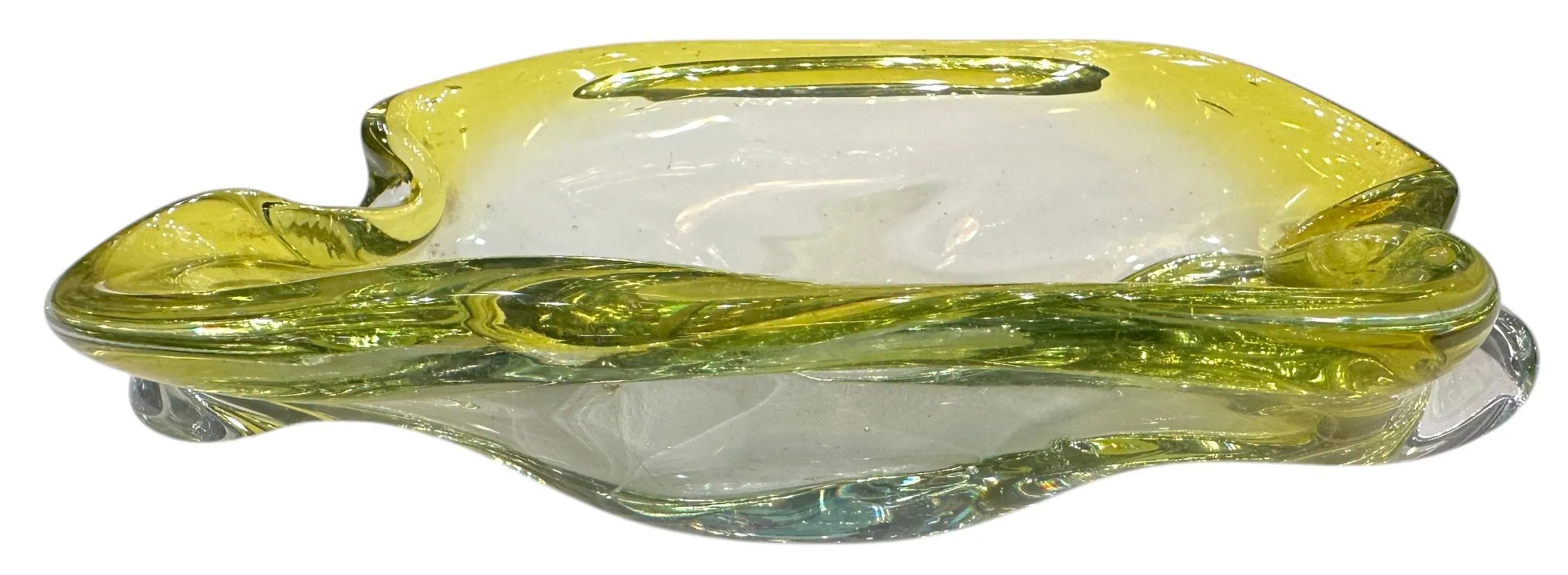
It is one of the most demanding and sculptural methodologies of Murano glass art. Unlike traditional blown glass (vetro soffiato), this technique does not aim to create a hollow vessel using air, but rather to shape a solid block, dense and heavy, of molten glass.
The process begins when the master glassmaker directly extracts a large amount of incandescent and malleable glass mass from the furnace using a solid iron rod.
Without resorting to air blowing to create internal cavities, the artisan manipulates the molten mass exclusively through gravity, metal tools, and their own manual skill. Wooden Tongs and Palettes are used.
Since they are thick and dense blocks of glass, the mass retains a very high internal heat but loses temperature quickly on the outer surface. The artisan must constantly reheat the piece in the mouth of the furnace (gloria) to maintain plasticity and avoid thermal stresses that could fracture the glass.
Given the large volume and thickness of the piece, the cooling process is critical. The sculpture or base of vetro massello must cool gradually over several days in a controlled annealing oven to release the internal tensions of the glass.
They are remarkably heavy objects with great structural solidity.










 Share