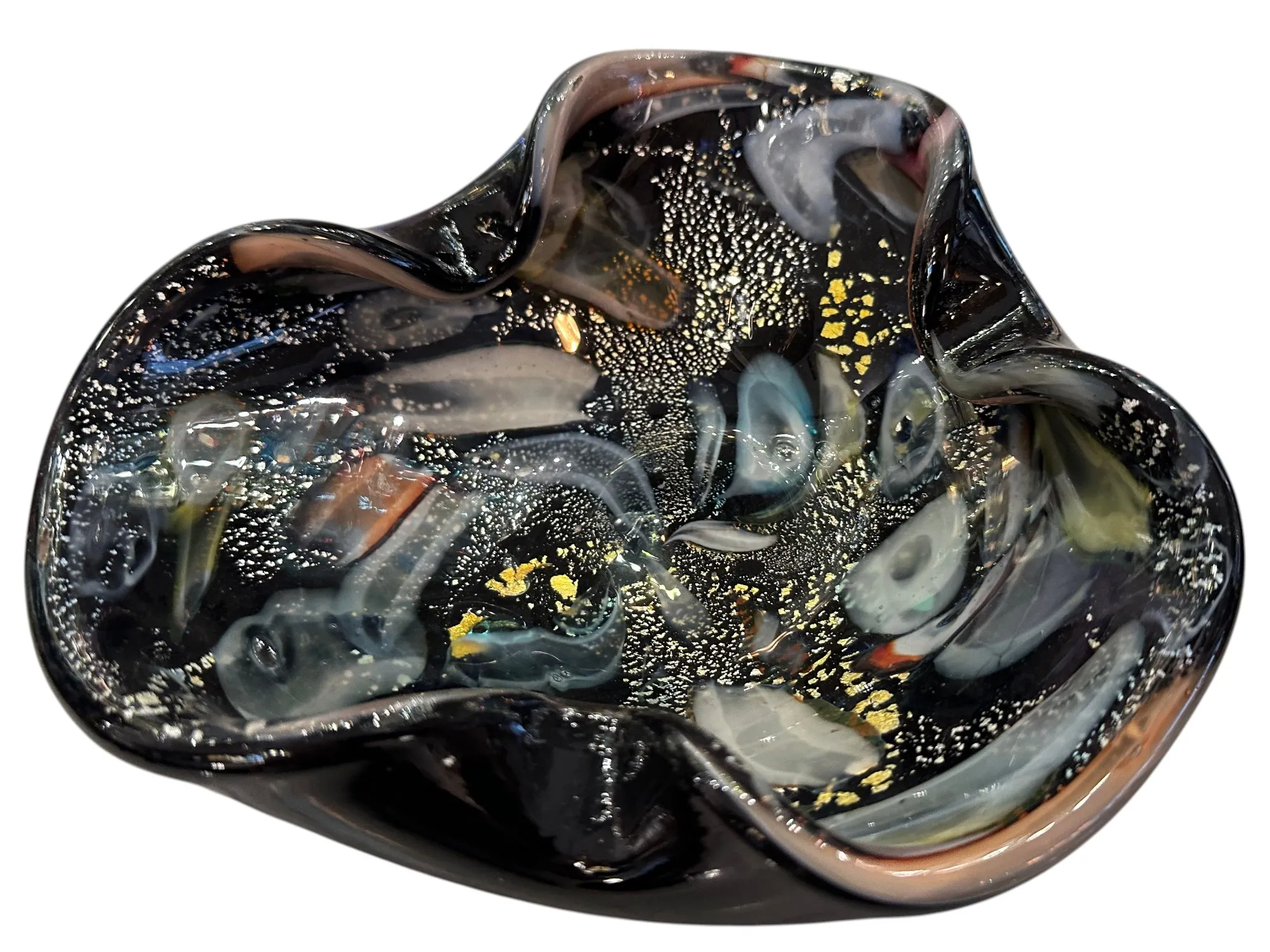
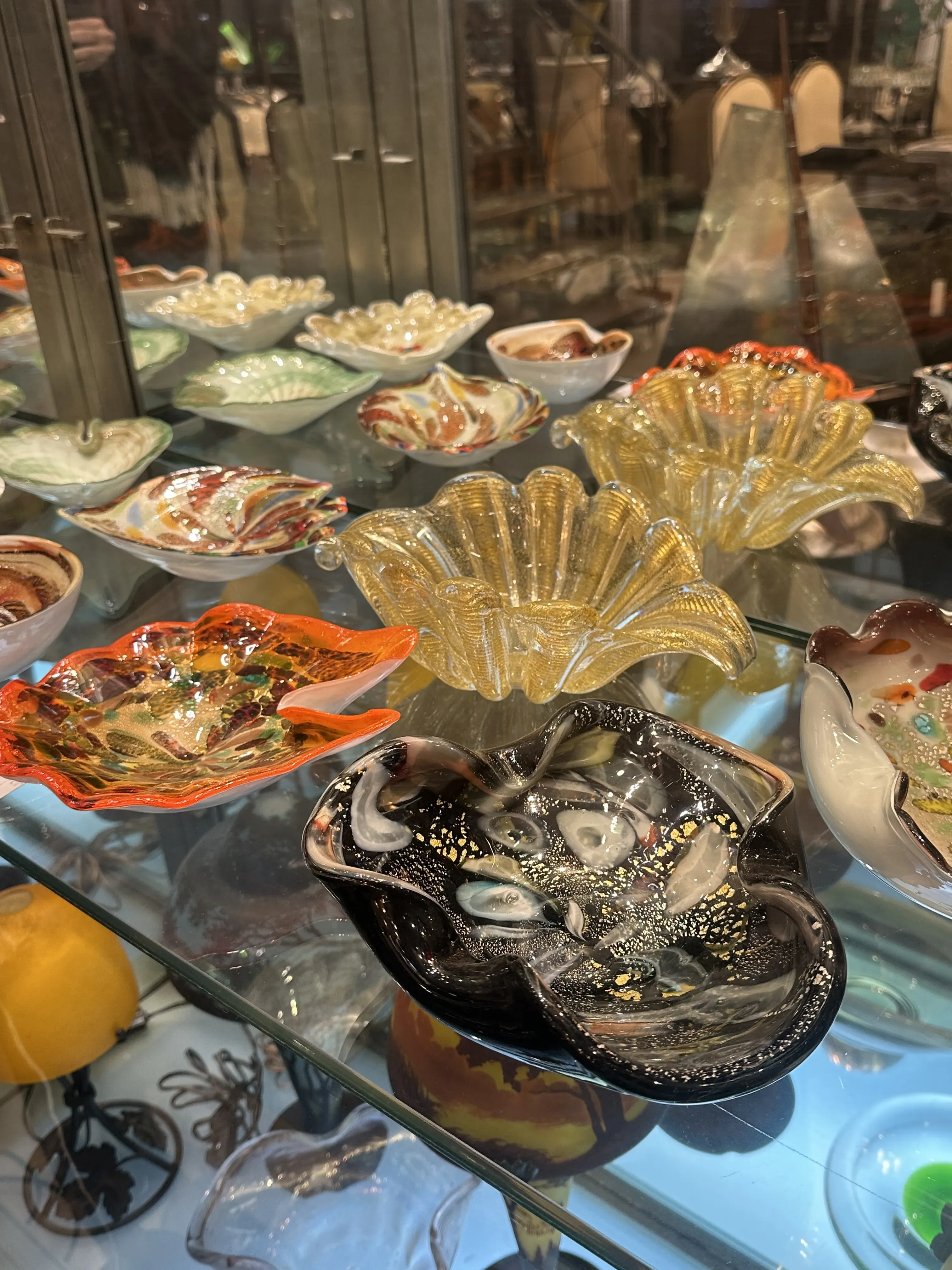
The aventurine is a glassmaking technique from Murano developed on the island of Murano in the 17th century. It was first mentioned in a document dating back to 1614 as 'a kind of stone with golden stars inside', at which point it was already mesmerizing people with its unusual and attractive appearance. The technique gets its name from the fact that its discovery happened by chance due to a fortunate coincidence, when it is said that a glass artisan accidentally dropped some metal shavings into the glass mixture. Italians say it happened 'all'avventura', which in Italian means 'by chance'.
The first documented recipe for the technique dates back to 1644, when the Murano master glassmaker Giovanni Darduin described how to create aventurine glass. The recipe involves adding various metallic oxides such as copper and iron to the hot glass mixture, which will cause small particles of the metals to crystallize as the glass mixture cools.
Complicating the process, for such crystallization to occur, the furnace had to be completely turned off, and the metallic particles would slowly separate from the glass base over a few days during the natural cooling of the glass. This was a very difficult process from a logistical perspective, as every time a glass furnace was turned off, it caused work to stop, and reigniting it was quite a large process, as it took time to heat it fully to the desired temperature.
As the industrial revolution reached Murano in the 19th century, the process had a remake. Large volumes of fine aventurine paste were produced that were then skillfully stretched into glass rods, which were then remelted for jewelry making under a small flame, or for glass blowing. This aventurine paste received worldwide acclaim and revived the fame of the Murano glass workshops due to its use in Salviati mosaics and in other pieces of rare magnificence, such as vases, glasses, cups, and bowls produced in the Salviati workshop.








 Share