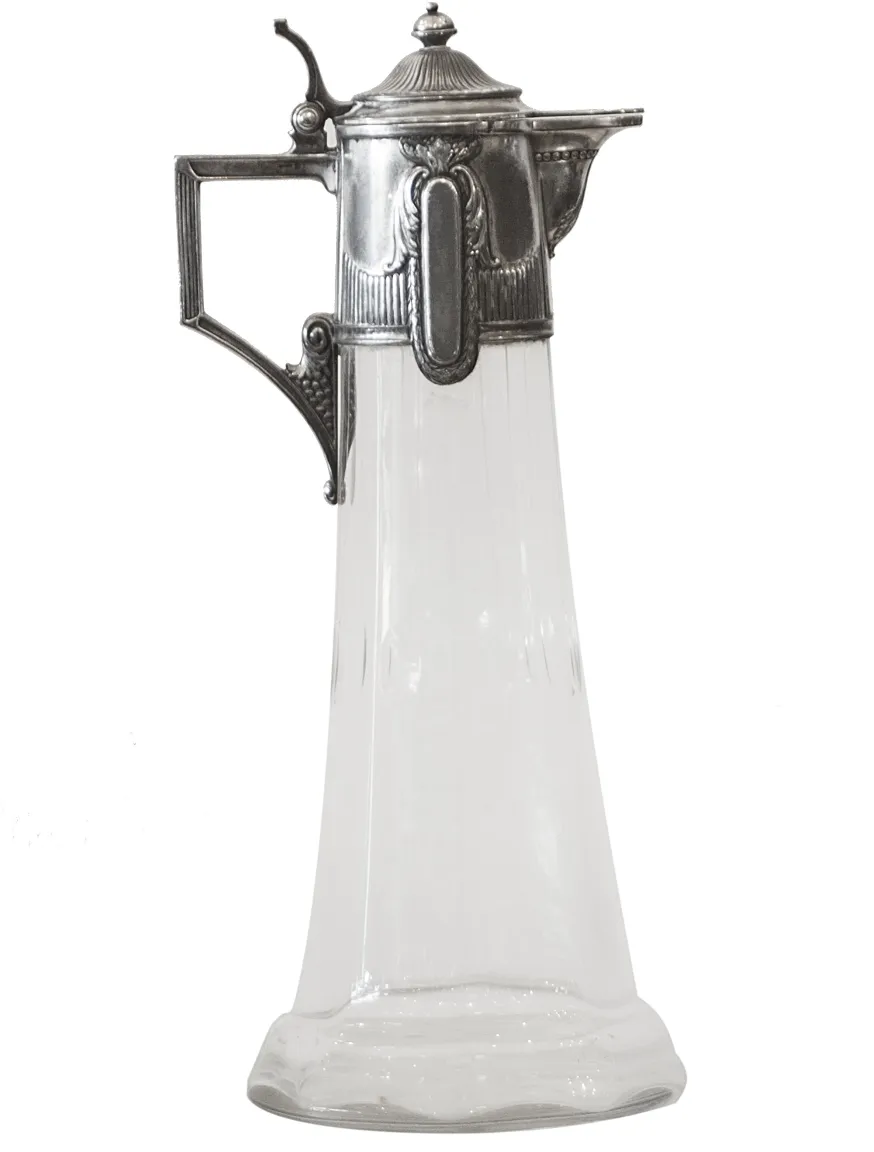
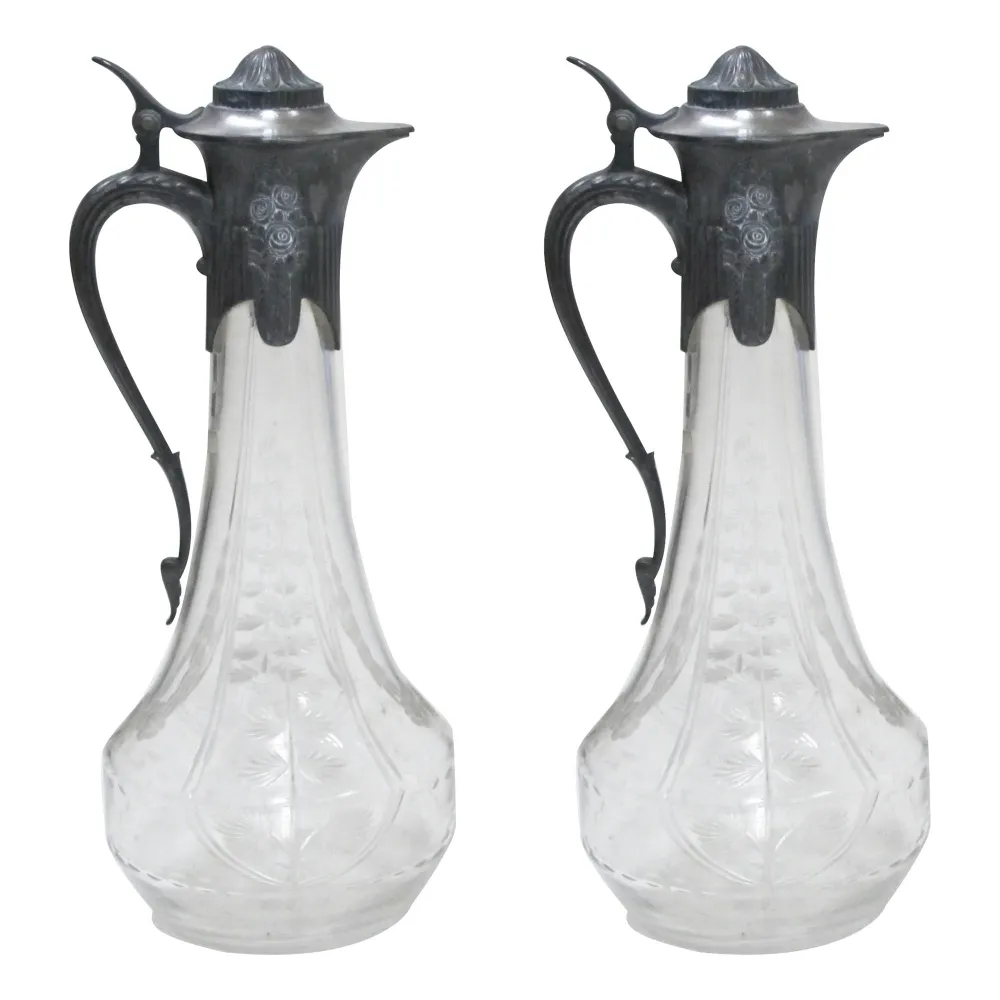
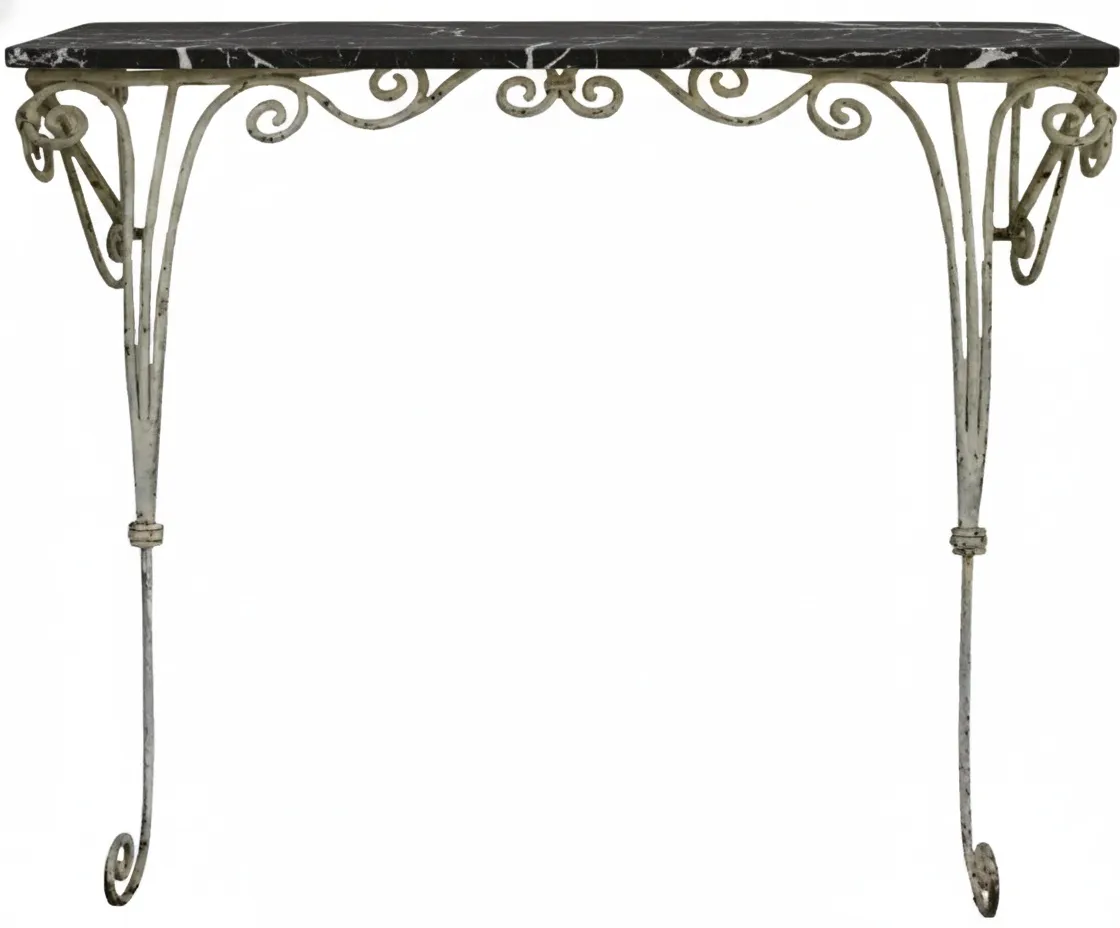
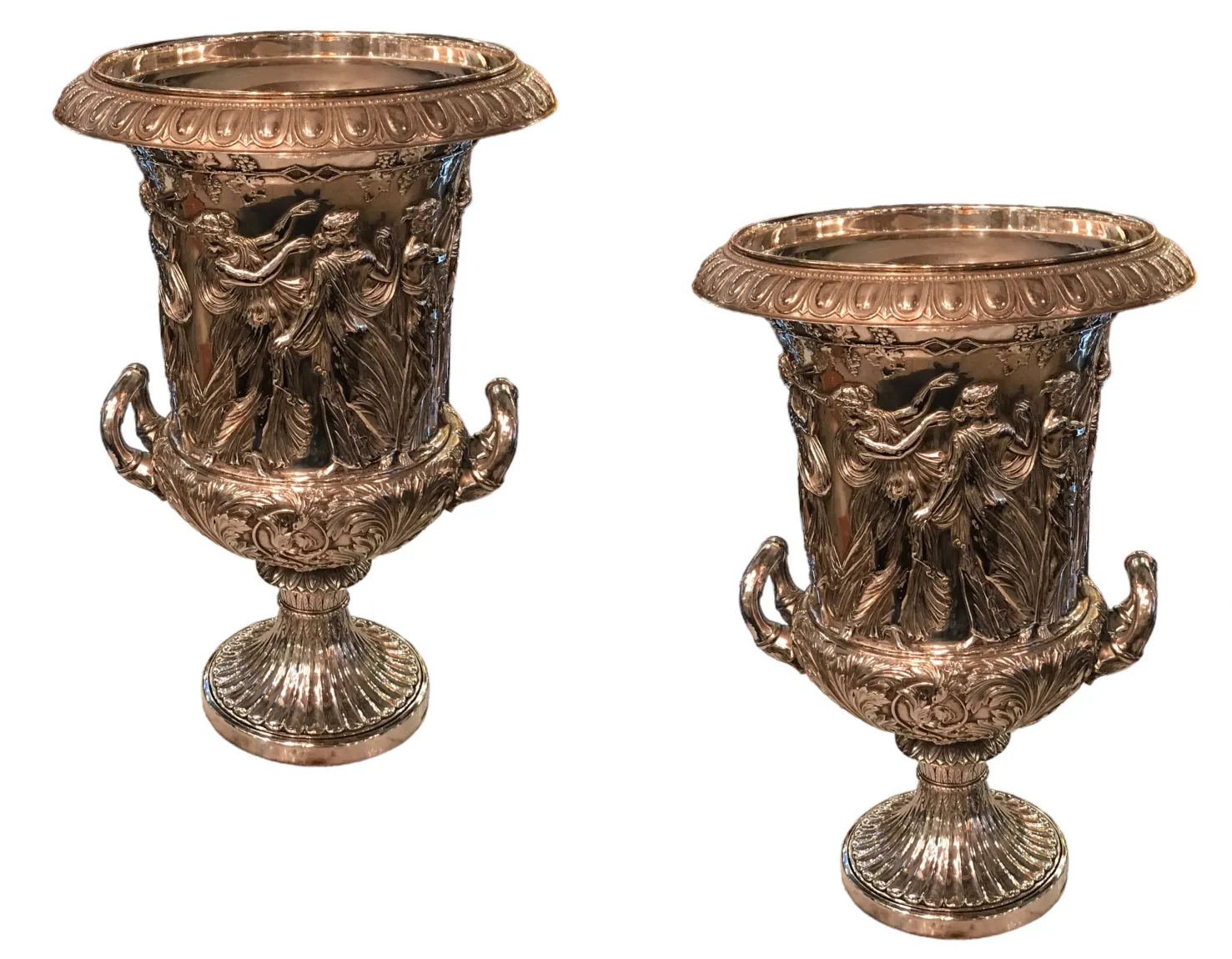
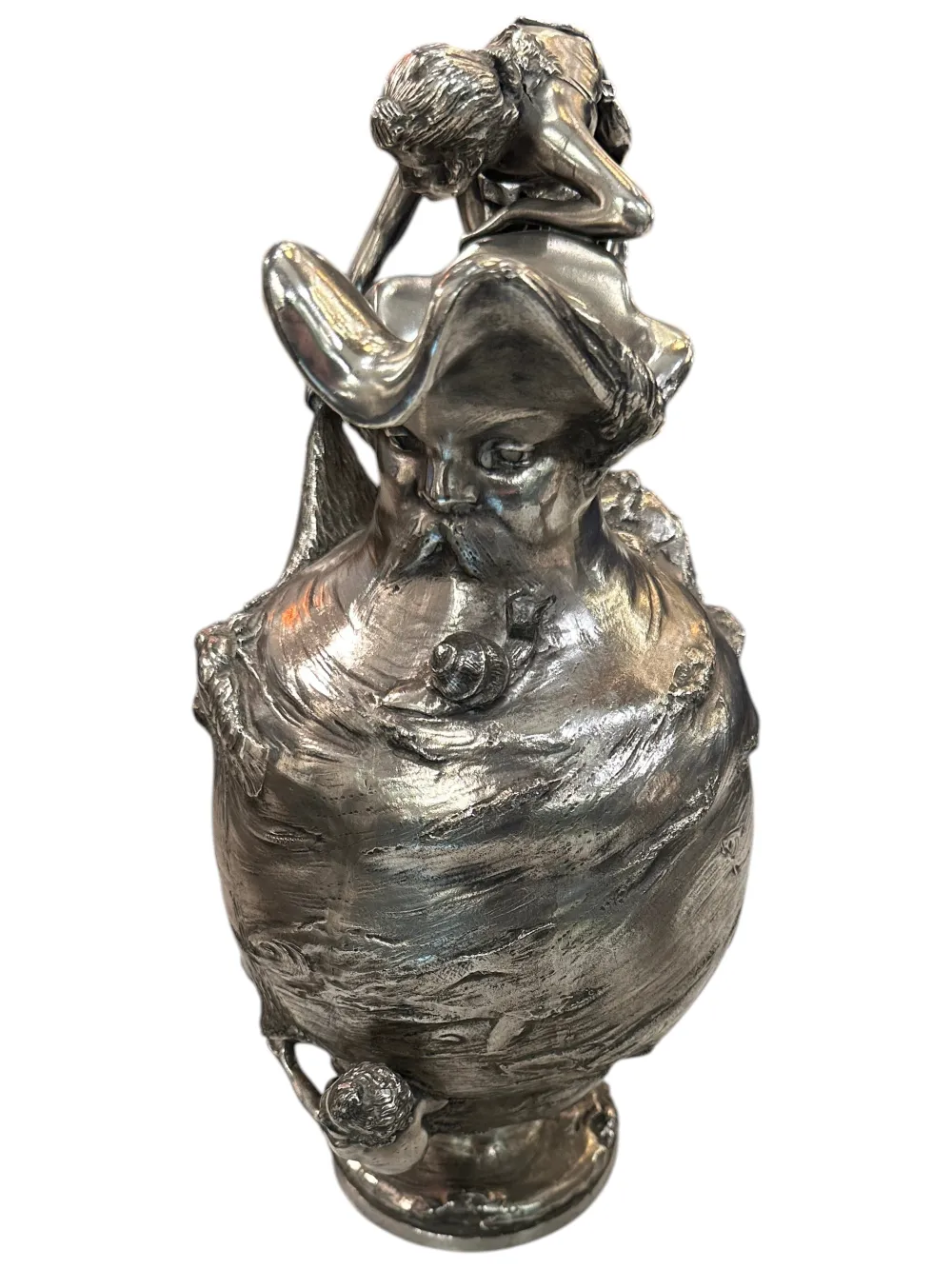
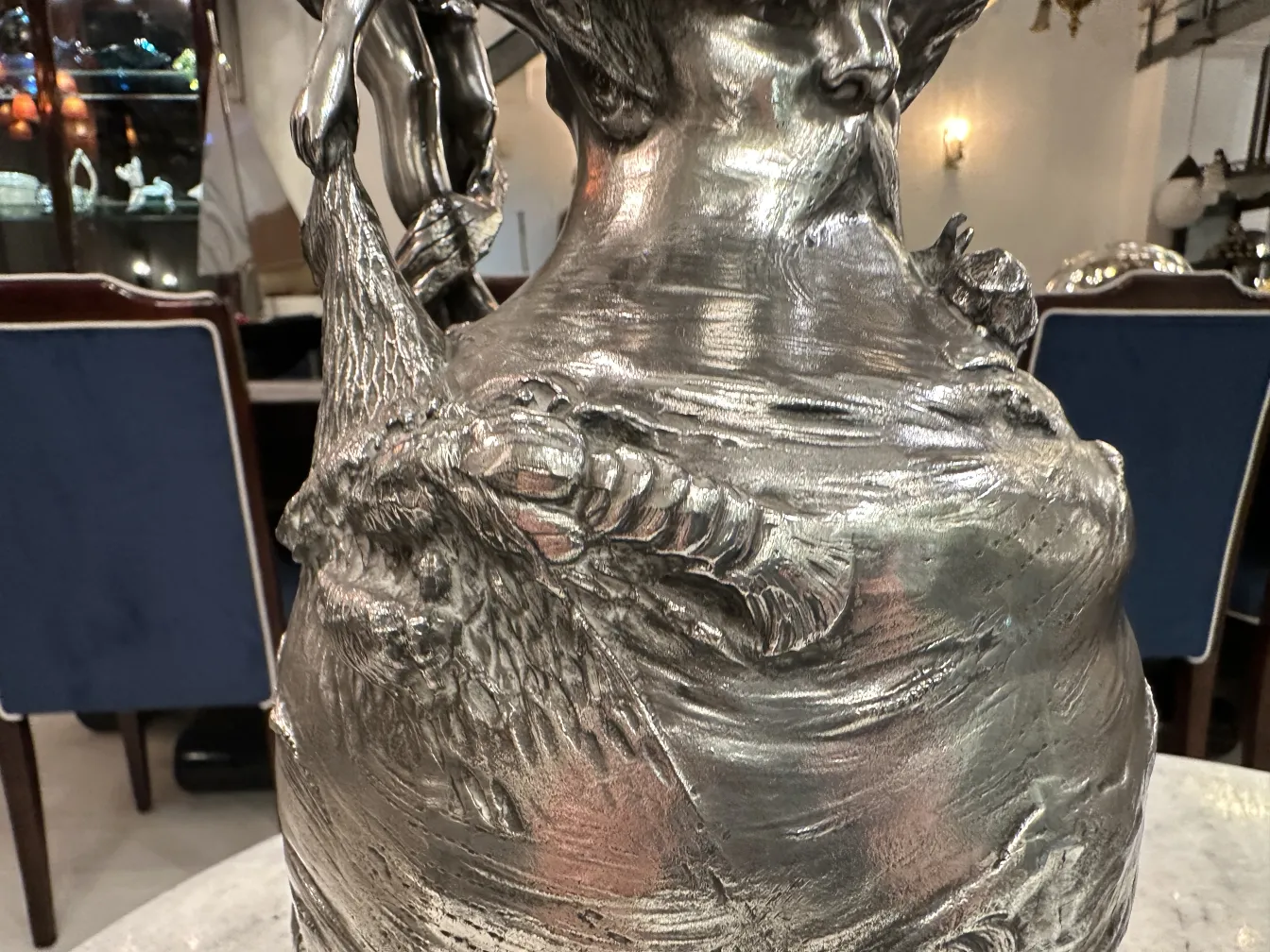
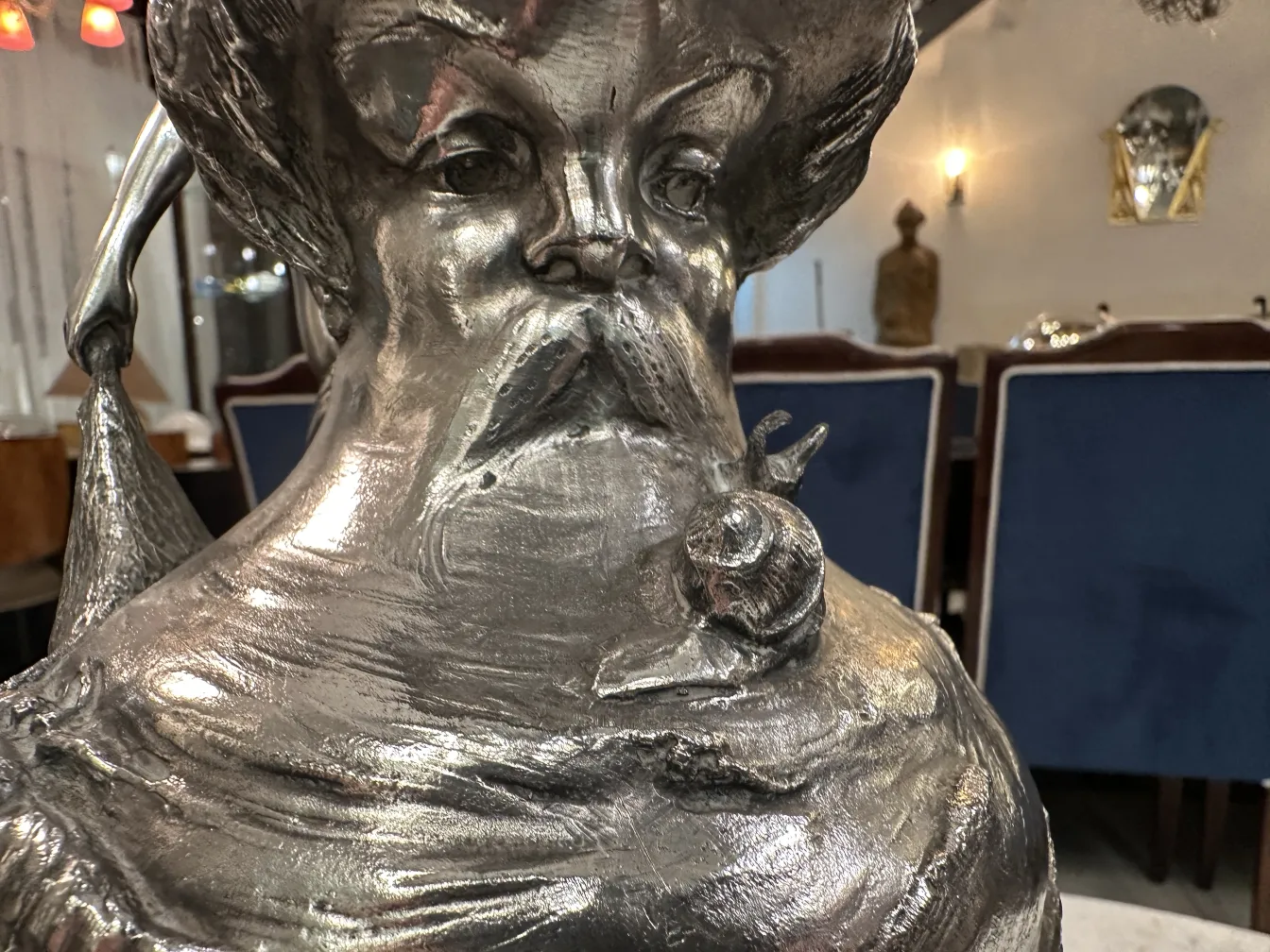
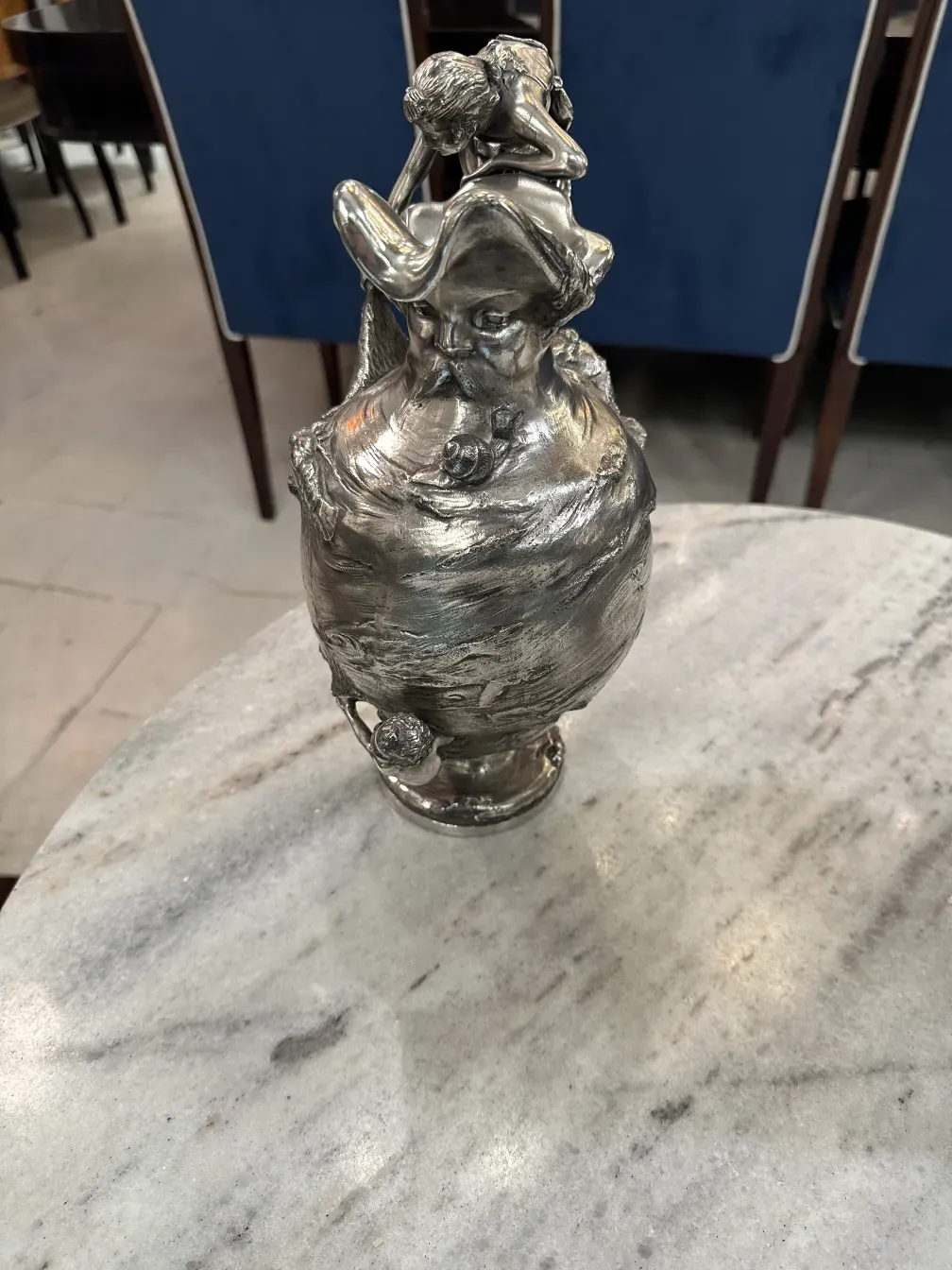
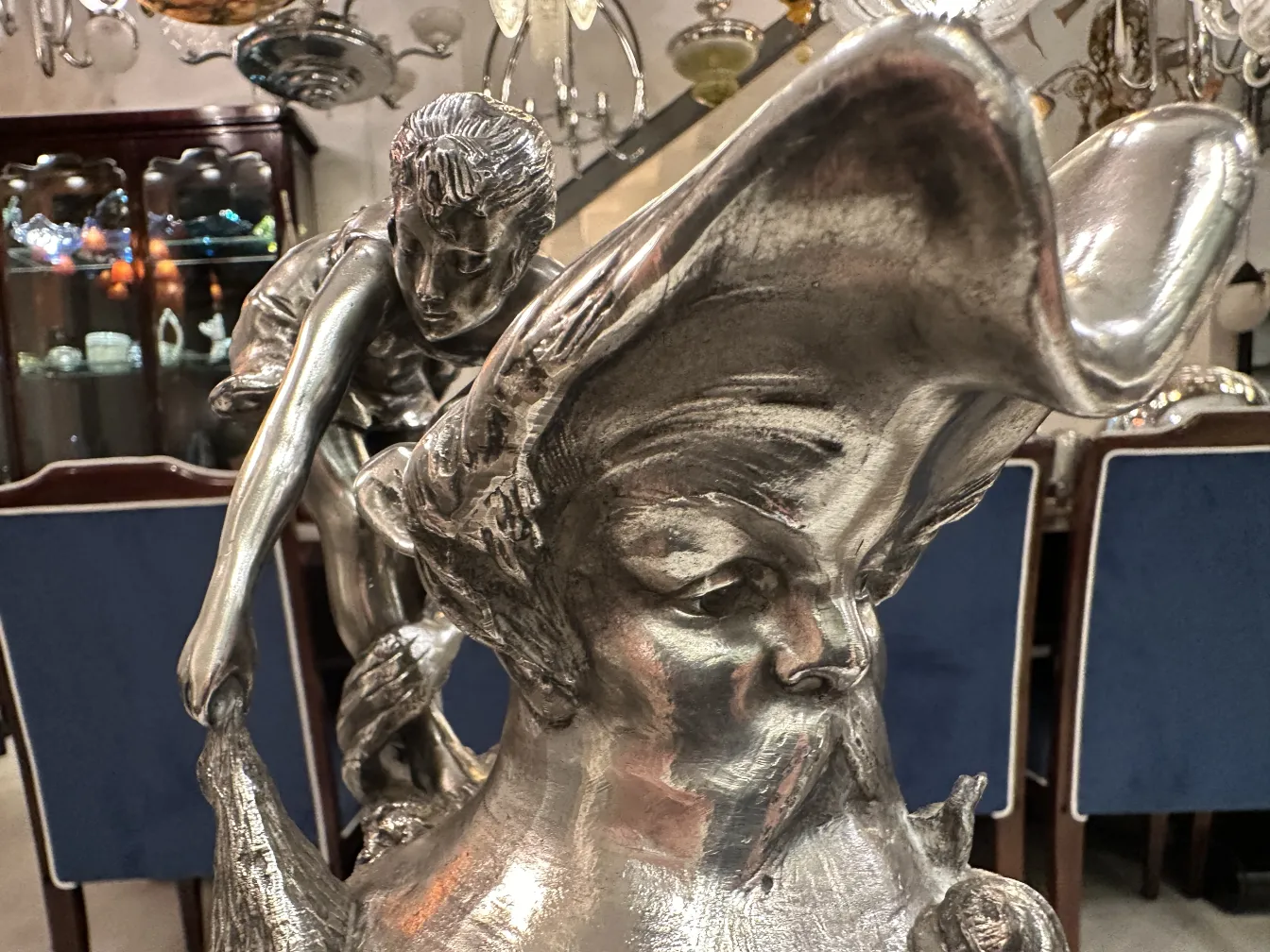
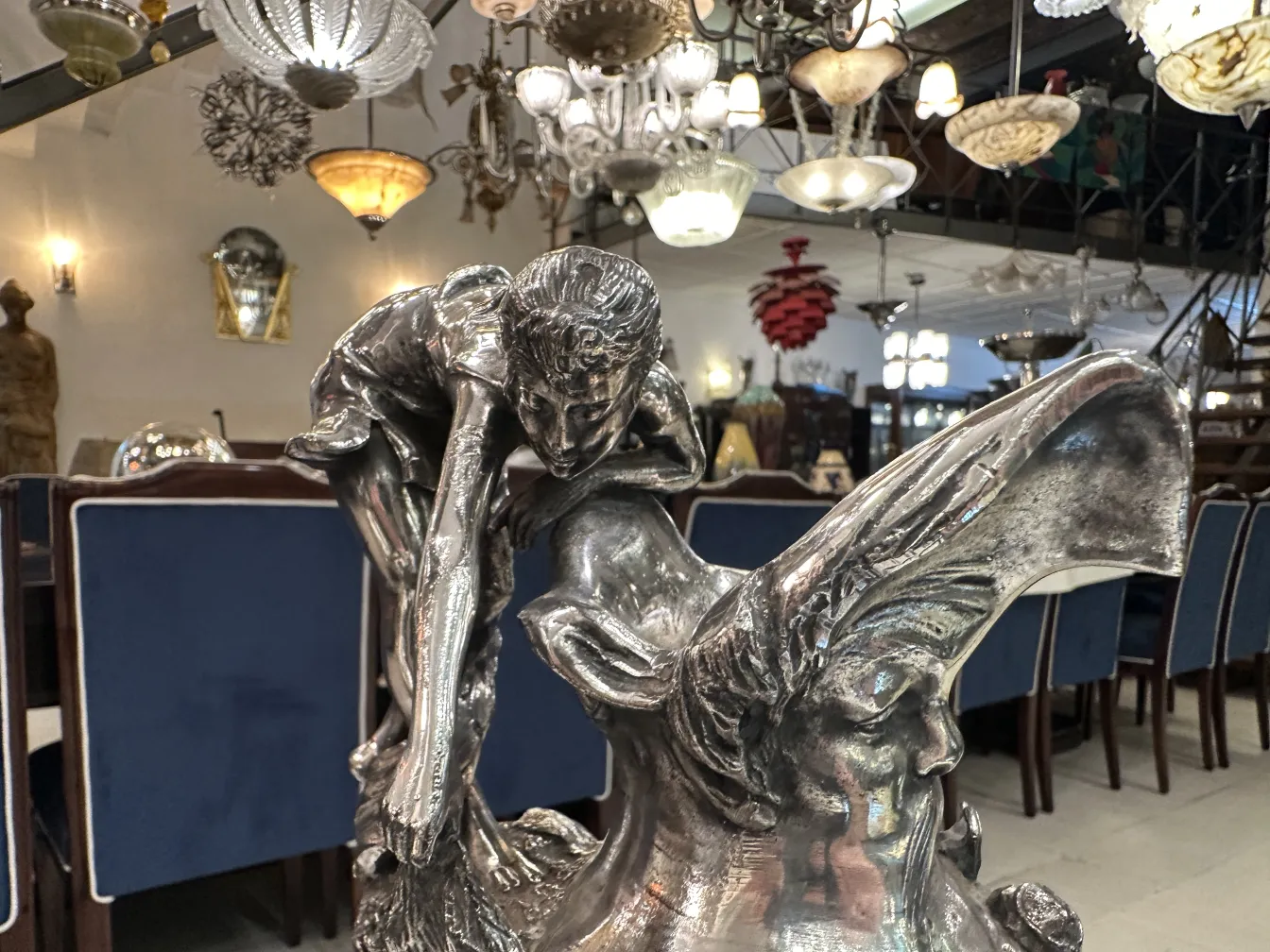
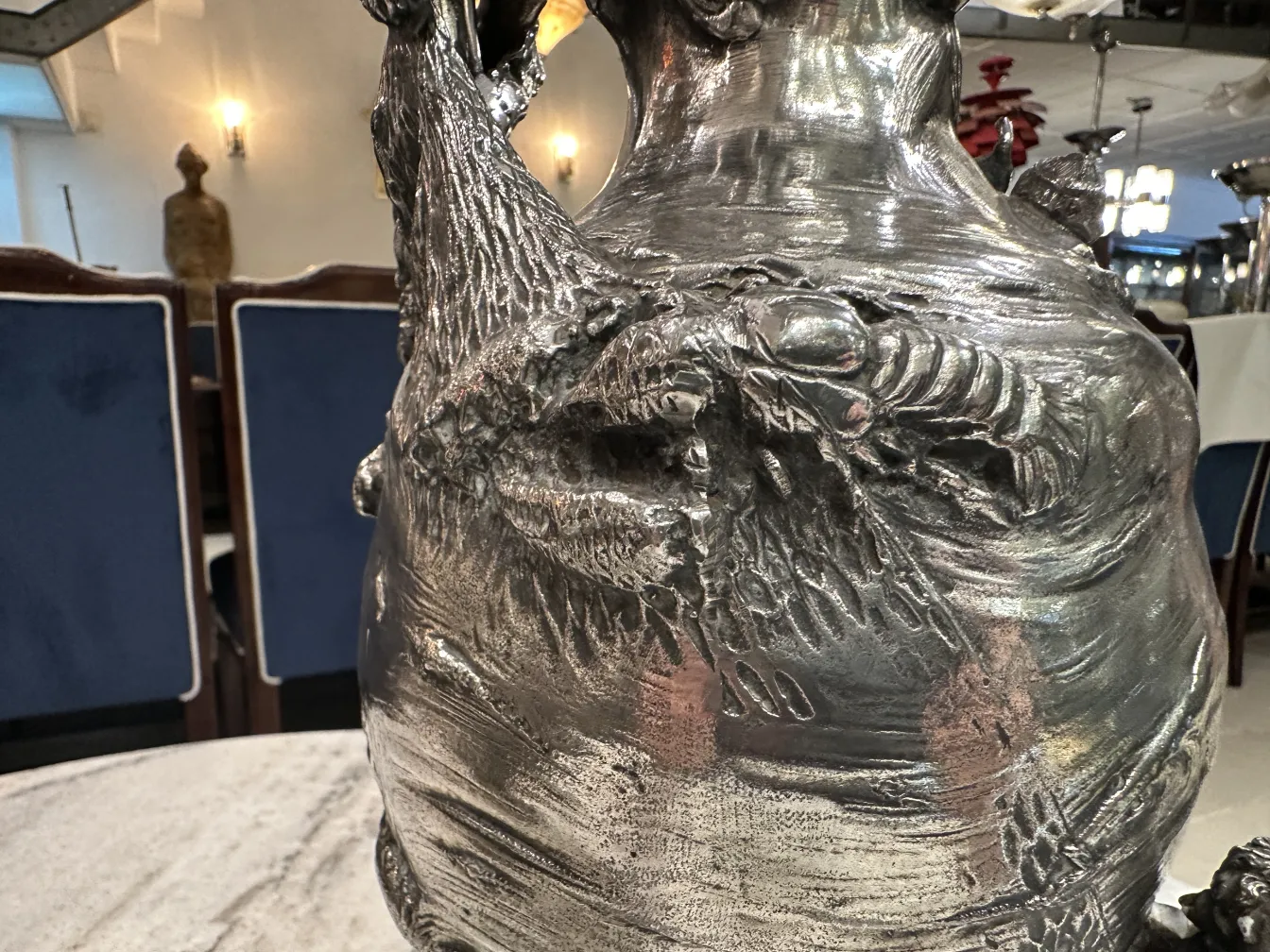
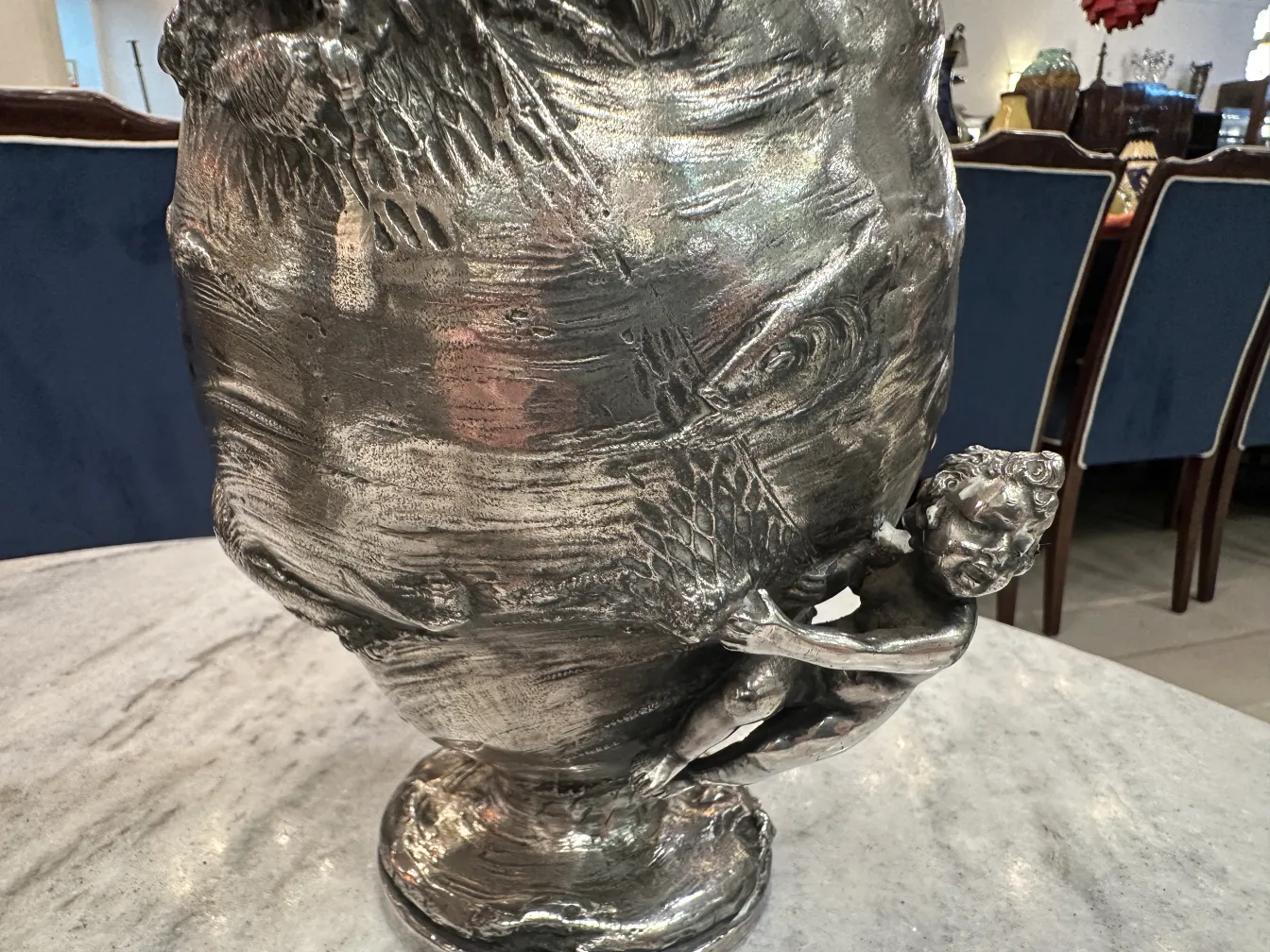
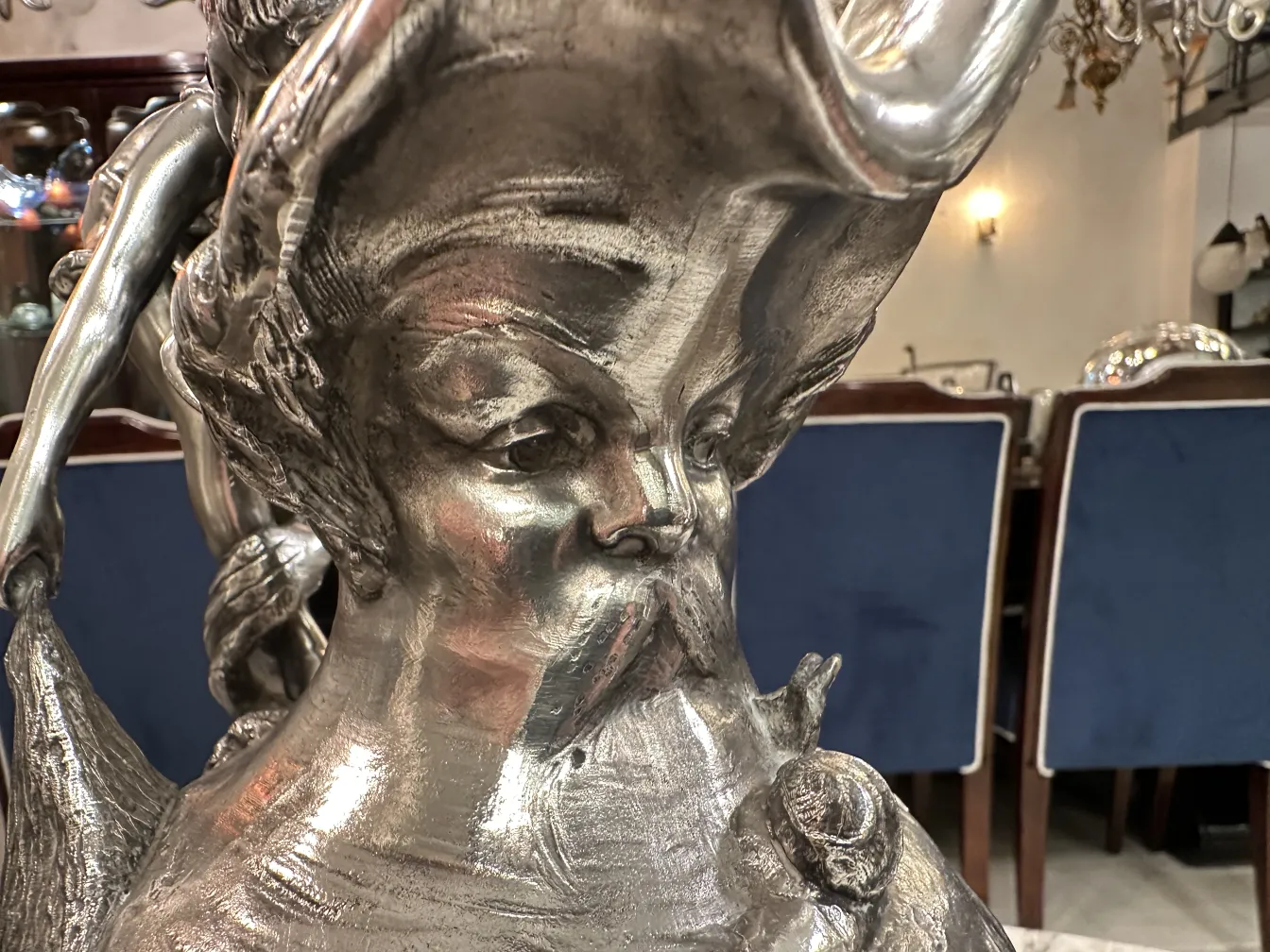
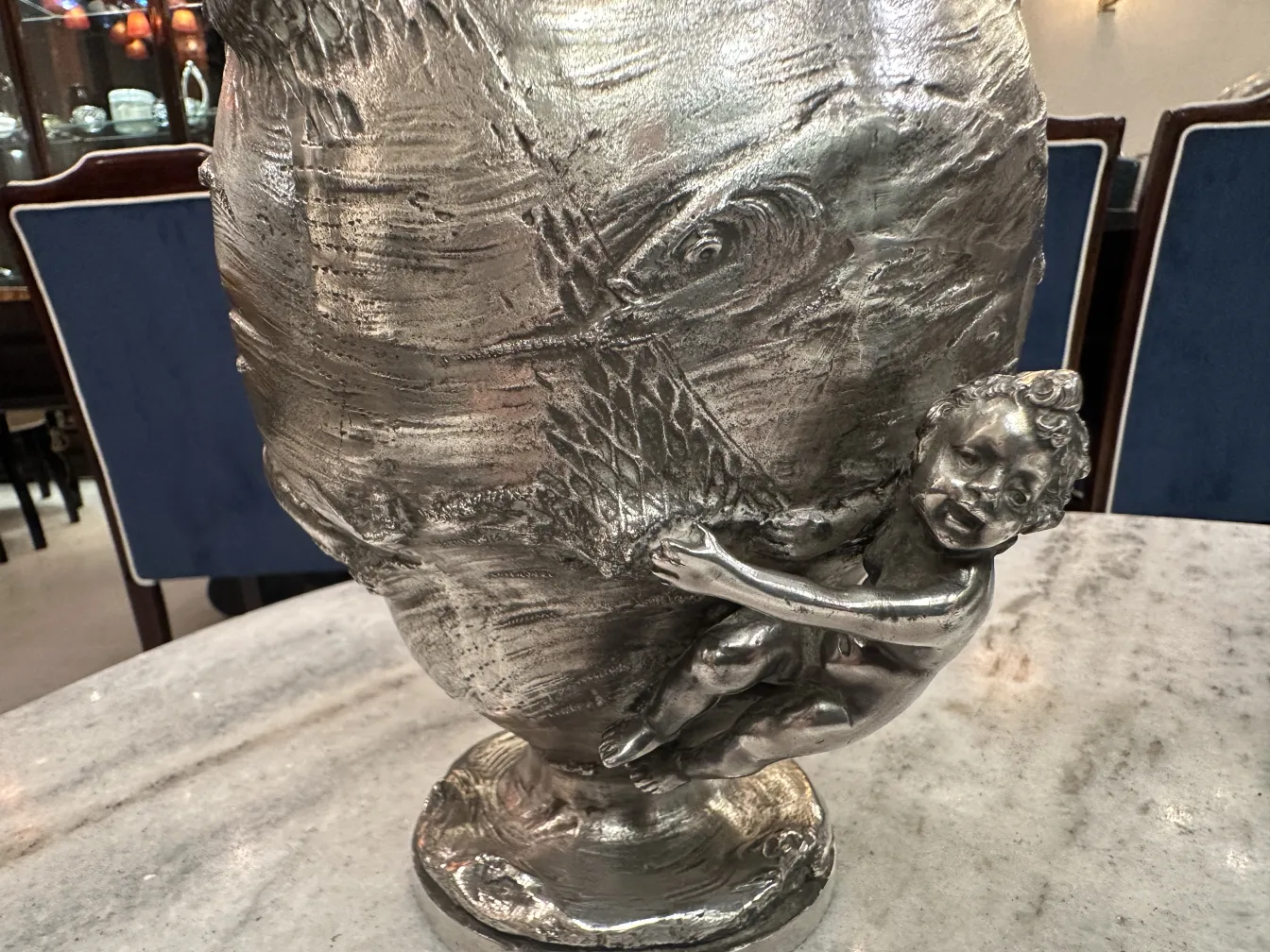
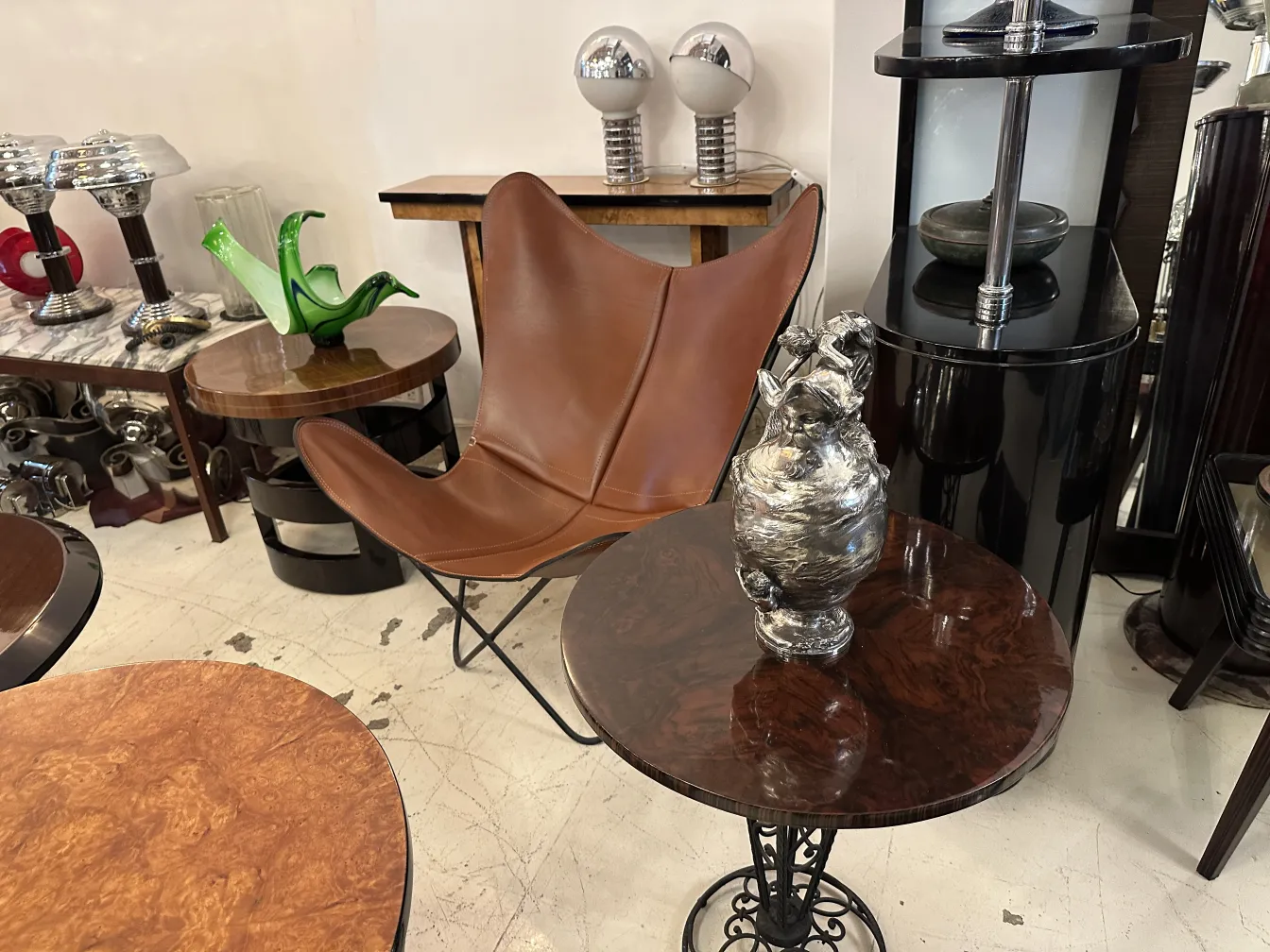
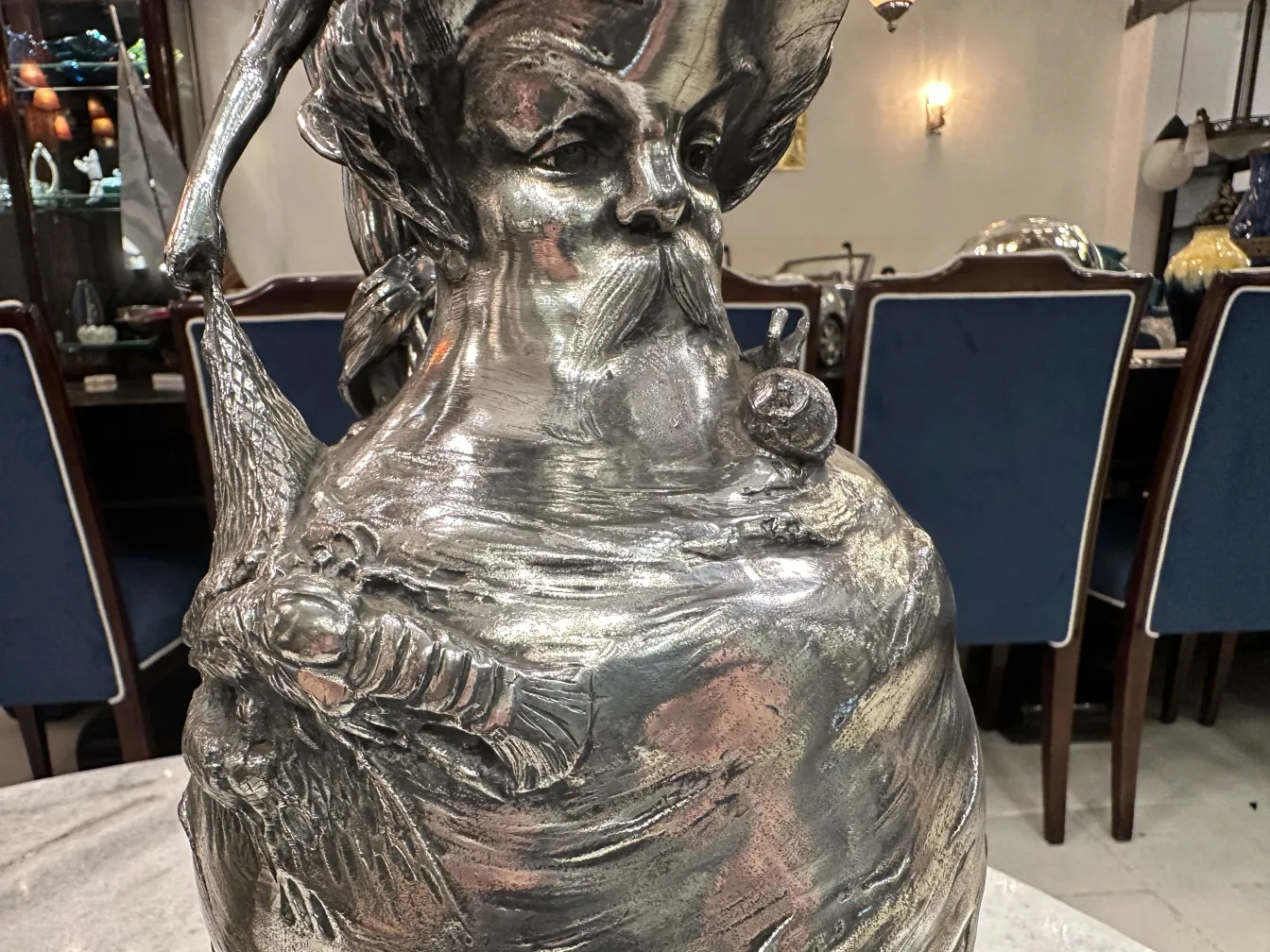
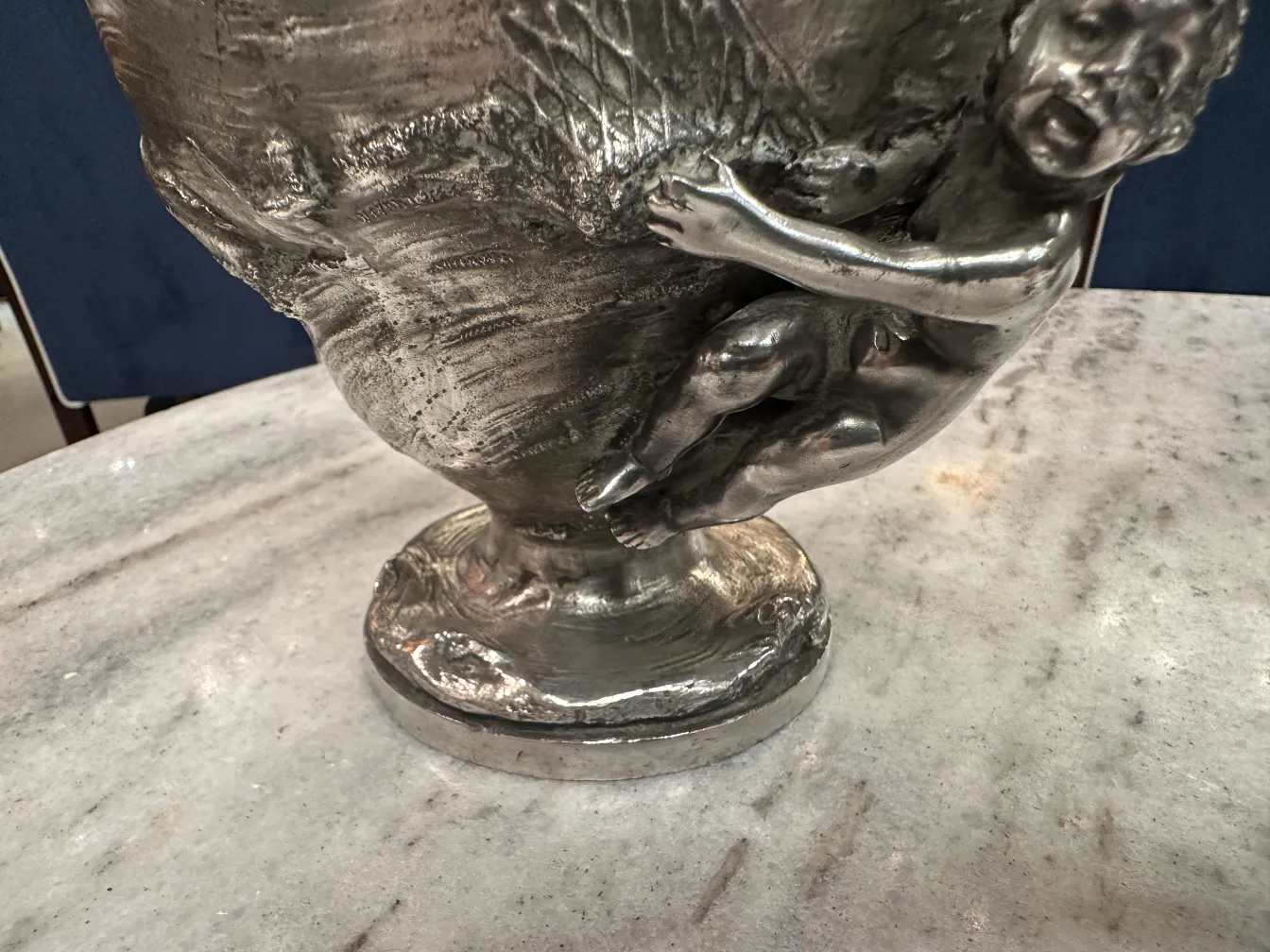
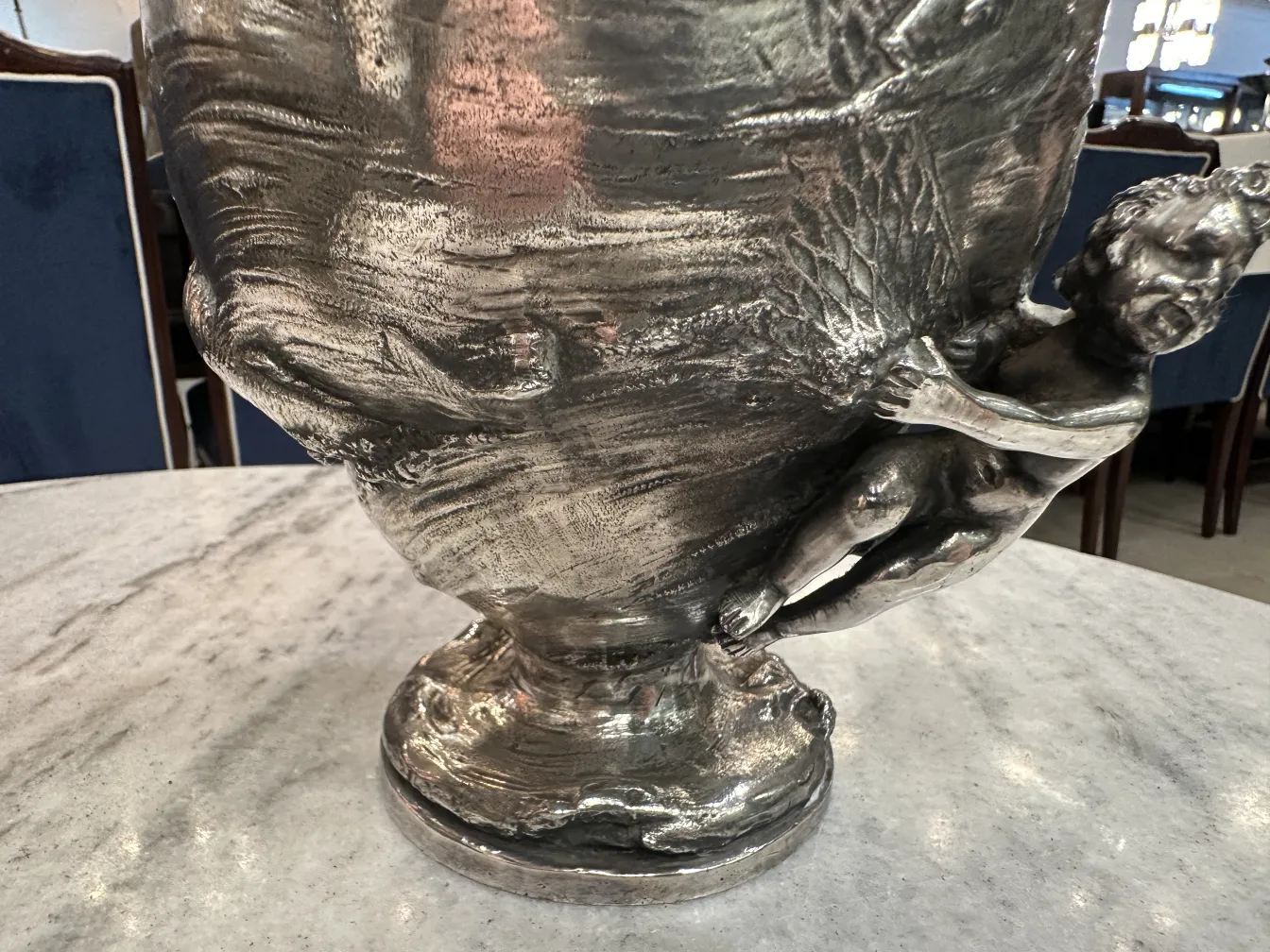
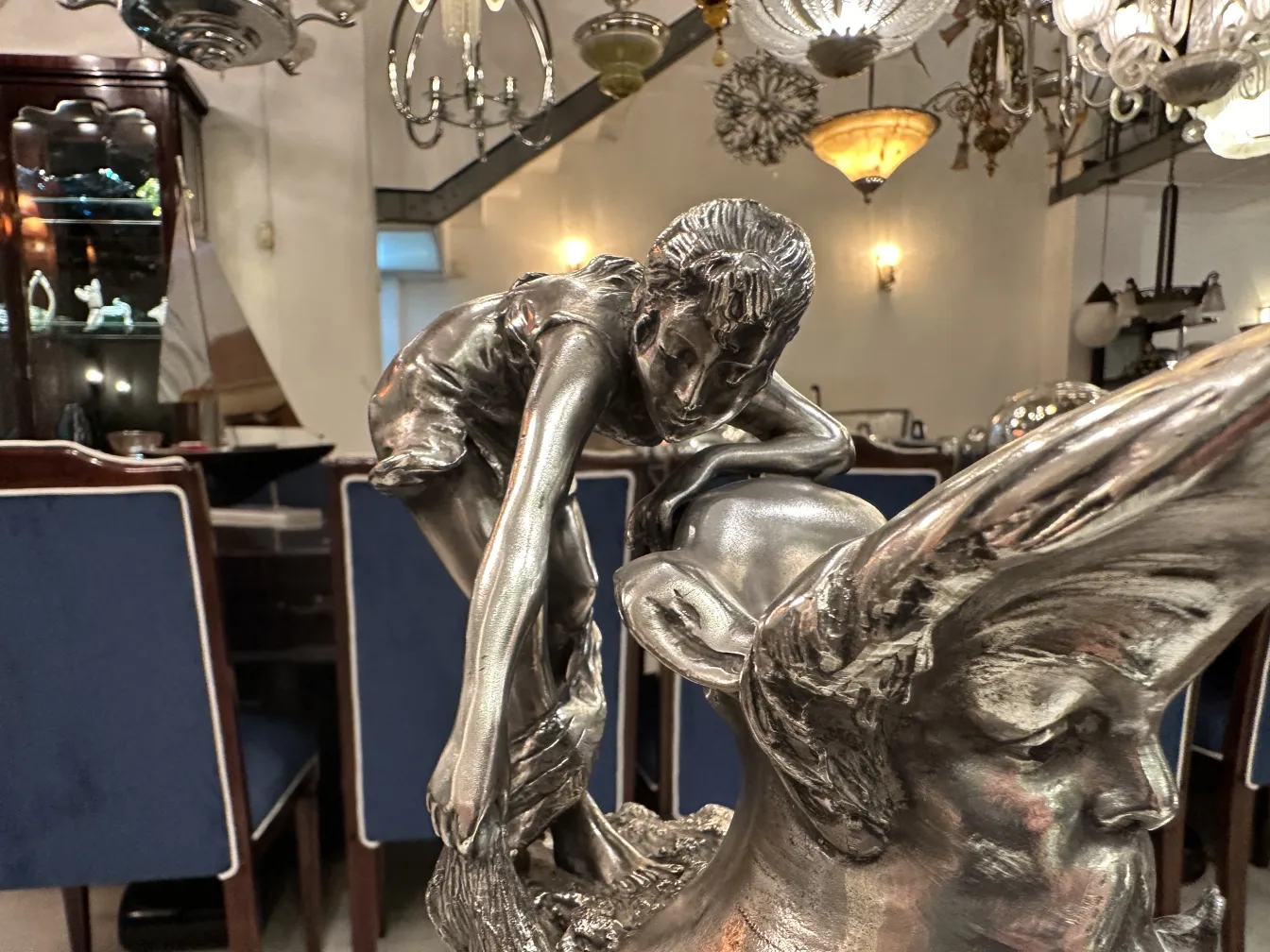
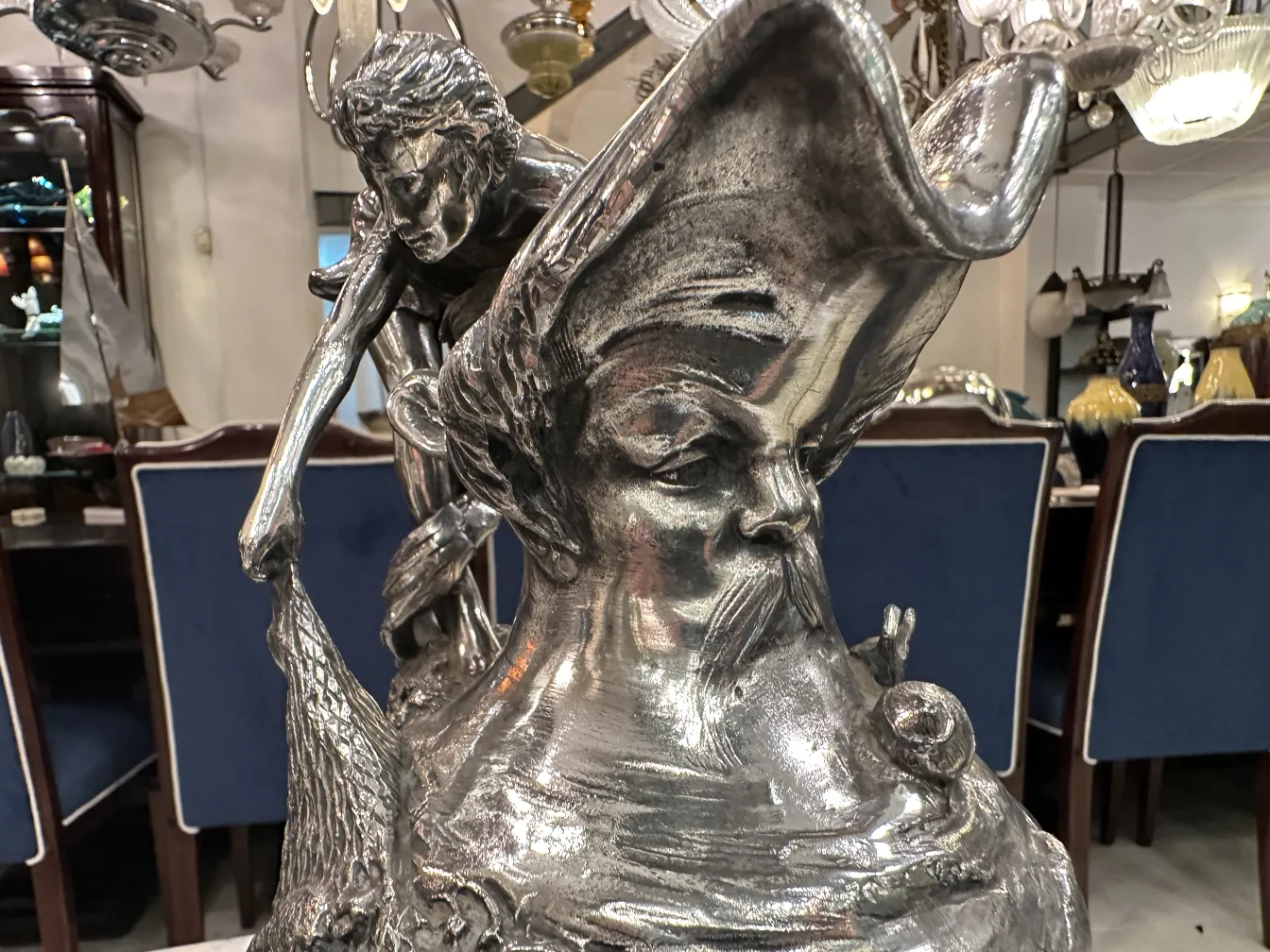
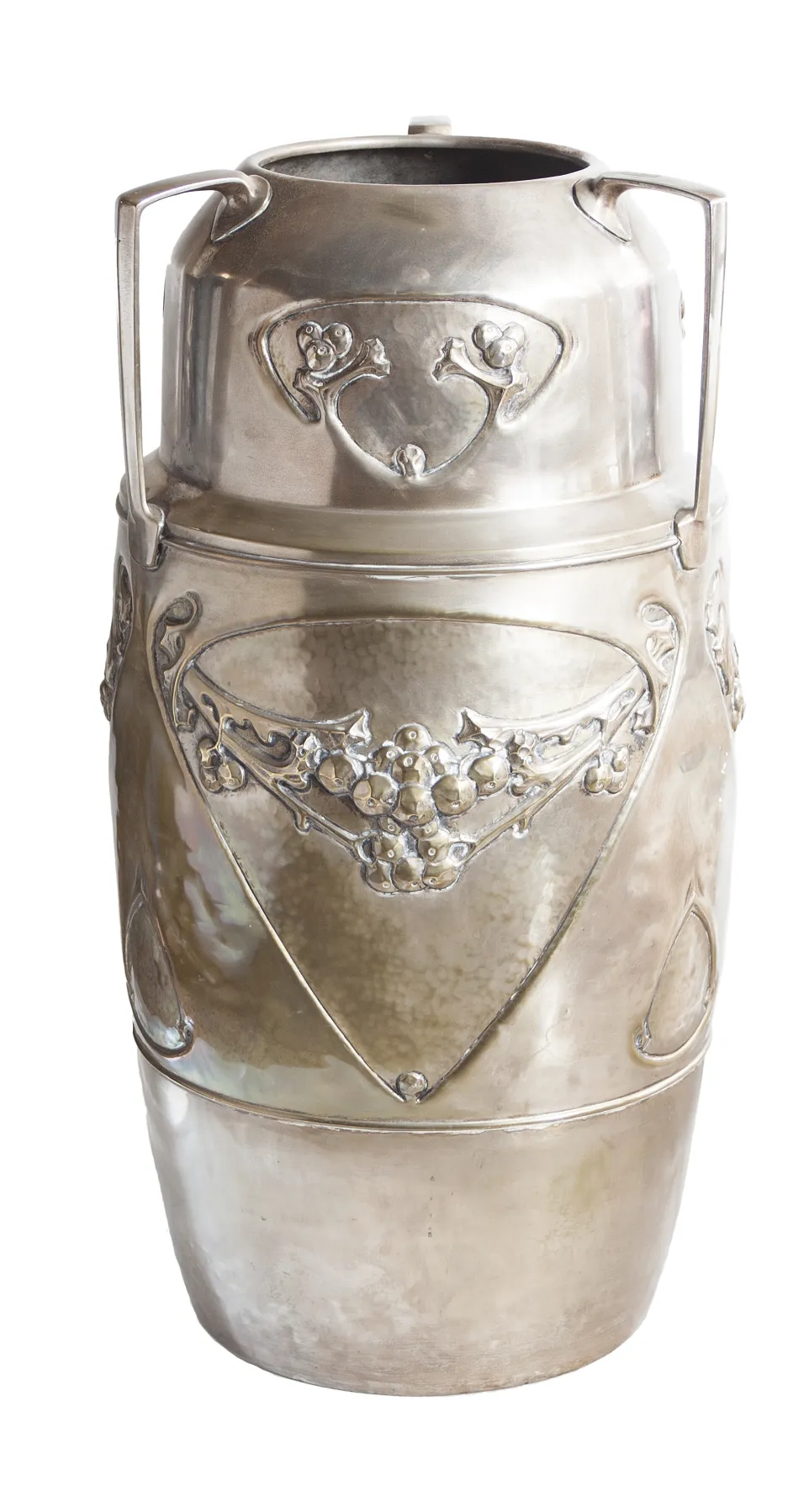
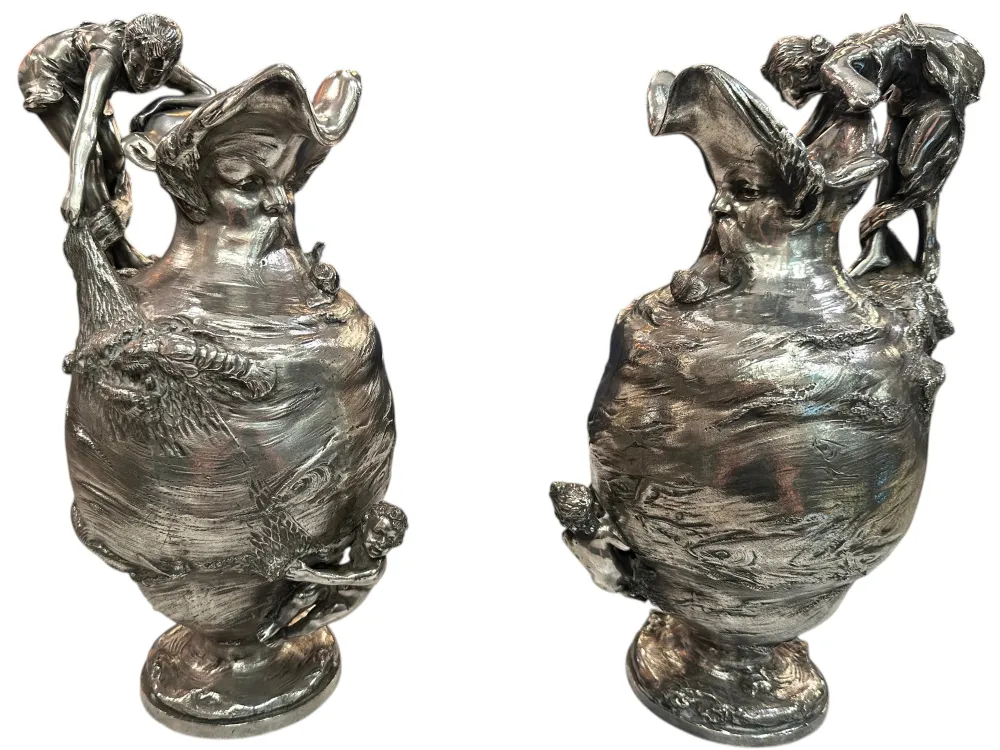
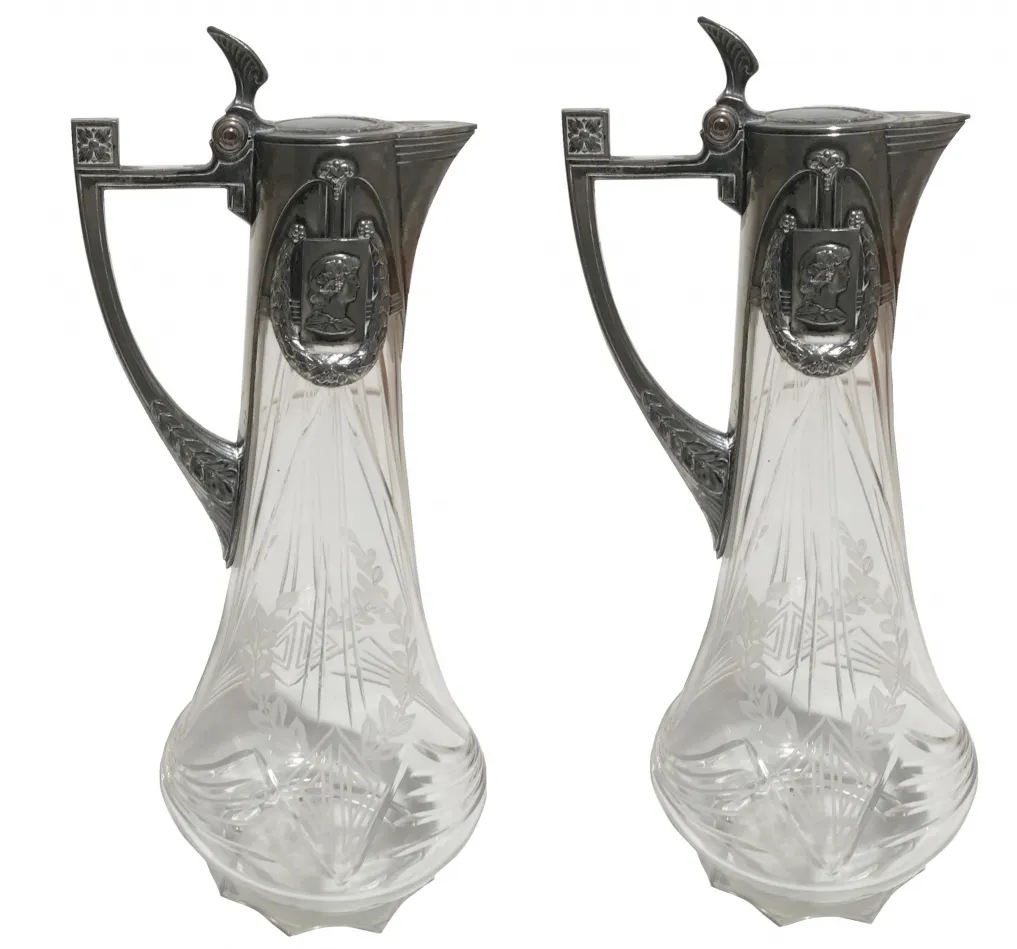
The company J.P. Kayser & Sohn was one of the most important and influential German manufacturers of silverware and pewter (Zinn) at the end of the 19th century and the beginning of the 20th century.
The company was established in 1862 in Krefeld, Germany, by Johann Peter Kayser along with his son Karl Kayser. Although its offices and central commercial direction operated in Krefeld, the main production of casting and manufacturing was moved and developed in the neighboring town of Kieslingswerth (near Aachen).
During the last decades of the 19th century, the company evolved from a traditional craft workshop into a large industrial plant specialized in the production of high-quality decorative and utilitarian objects.
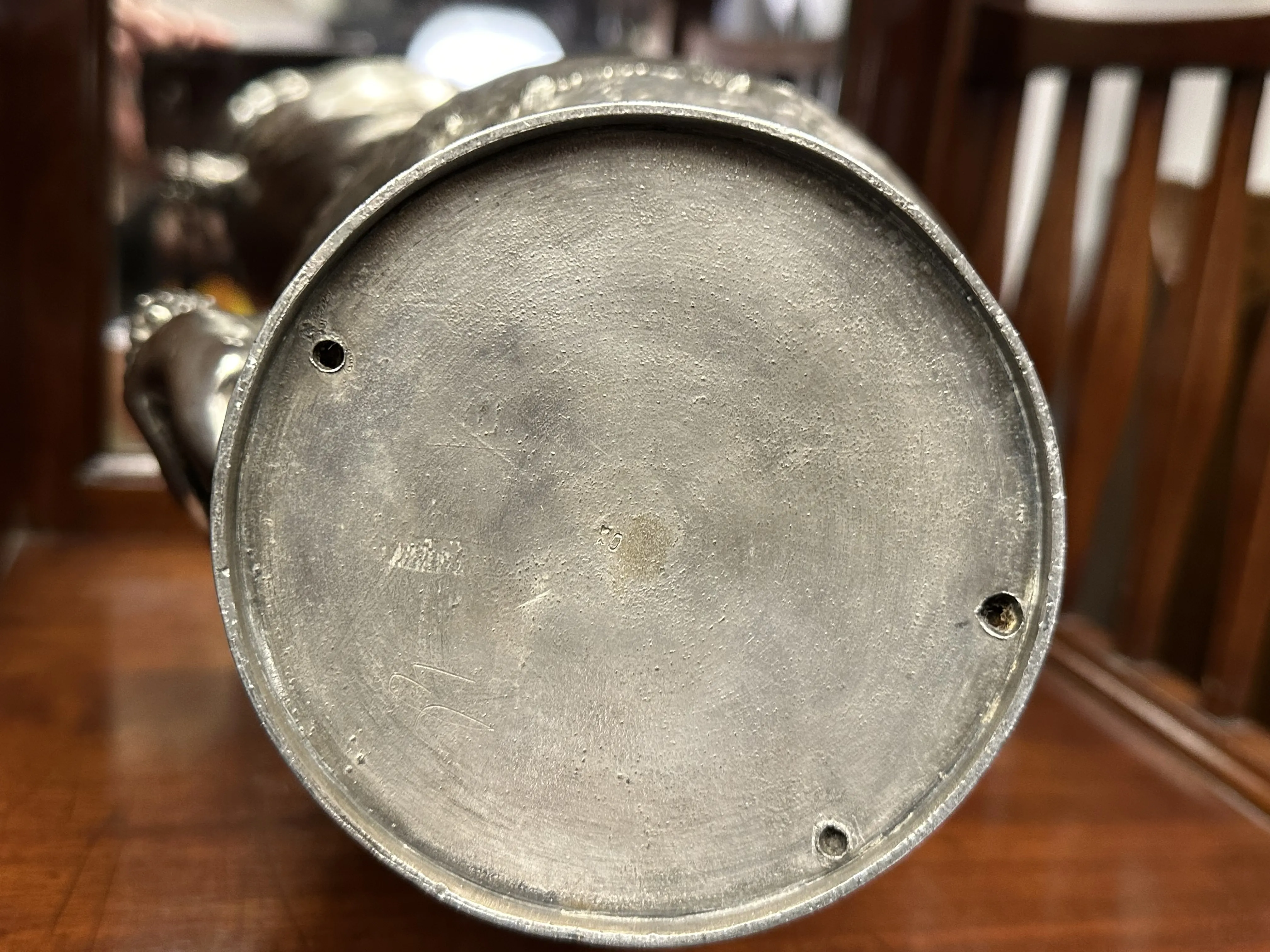
The earliest pieces bore the mark "KAYSER" which includes the silhouette of a bird until 1895.
The company launched a second brand"Kayserzinn" which operateduntil 1920, when they had to close due to the war impactof World War I in 1914.
The scarcity of raw materials and the mobilization of workers made it difficult to continue production.
Many of its designs can be seen in different museums such as:
MoMA (Museum of Modern Art) – New York
Cooper Hewitt, Smithsonian Design Museum – New York
Museum Angewandte Kunst (Museum of Applied Arts) – Cologne, Germany
Rijksmuseum – Amsterdam, Netherlands
Dixon Gallery & Gardens – Tennessee, United States




 Share
Share






1782856979.webp)