



It was founded in 1859 in Murano, Venice, Italy, by Dr. Antonio Salviati, Enrico Podio, and Lorenzo Radi.
The first workshops and premises of the company founded by Dr. Antonio Salviati were established at number 731 in the Dorsoduro, Venice district.
Between 1903-1906, The Palazzo Salviati was built at number 195 in the Dorsoduro sestiere (facing the Grand Canal, between the Barbaro Wolkoff and Orio Semitecolo Benzon palaces), the iconic Palazzo Salviati, designed by architect Giacomo Dell'Olivo. This building served as a large commercial showcase, exhibition hall, and furnace of the brand, famous for displaying a huge artistic mosaic on its central facade.
In 1883, it was acquired by the Barovier family, but continued under the name Salviati & Co. After the death of Antonio Salviati in 1890, the company was run by Amalia Salviati Ivanich and her two sons, Giulio Salviati and Silvio Salviati.
In 1920, after Silvio's death, the company was led by Maurizio Camerino and his two sons, Mario Camerino and Renzo Camerino.
Dino Martens designed for Salviati between 1932 and 1935. The painter Luciano Gaspari was the artistic director from 1955 to 1968. Other designers included Romano Chirivi, Renzo Camerino, and Sergio Asti.
Currently, the historic brand operates and maintains its legacy at Fondamenta Lorenzo Radi (Murano, Venice).
Its collections are part of prestigious international decorative arts galleries and museums:
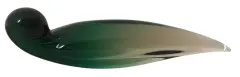
Museum of Glass (Murano, Italy)
Le Stanze del Vetro (Giorgio Cini Foundation, Venice, Italy): A cultural reference space on the Island of San Giorgio Maggiore that regularly houses and exhibits masterpieces of historical and contemporary Murano glass linked to the Salviati archives and their collaborations at the Venice Biennale.
The Metropolitan Museum of Art (The Met, New York, USA)